
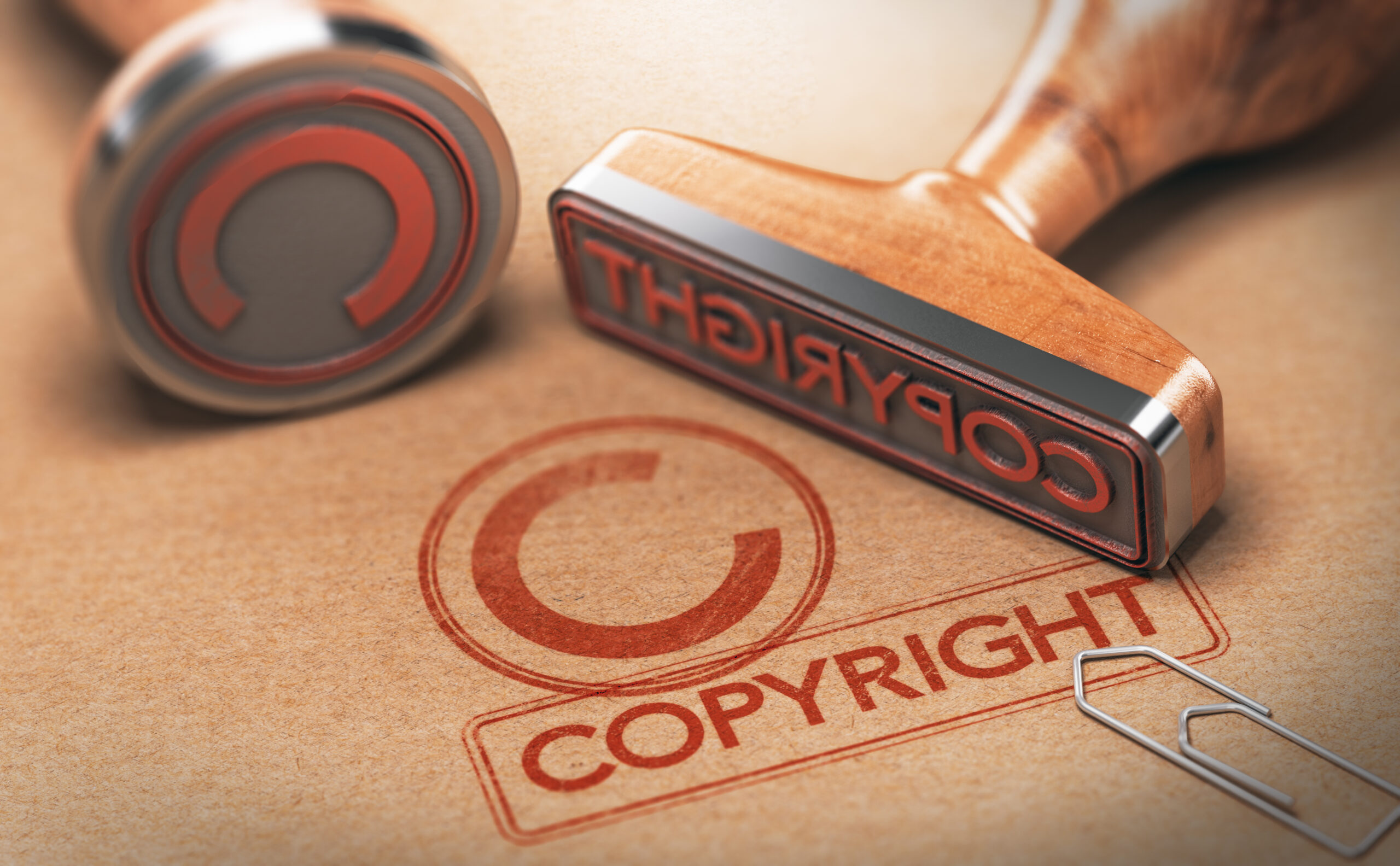
Who owns AI-Generated content?
An employee creates an image with AI for a campaign. Another uses artificial intelligence to prepare part of a report. The product team generates code. Marketing creates copy. And somewhere along the way, a question appears that probably should have been asked earlier:
Who actually owns it?
The answer is less straightforward than “the company, because it was created during working hours”.
The growing use of generative AI is creating new challenges for legal departments, particularly when AI-generated content is used commercially, incorporated into products or presented as an asset owned by the organisation.
And the first issue starts with the word “author”.
Can AI be considered an author?
Under traditional copyright principles, copyright belongs to the intellectual creator of the work.. A própria IGAC identifica o autor como a pessoa que cria um trabalho original suscetível de proteção.
That makes human involvement particularly important.
A text, image, video or other piece of content created entirely by an AI tool, without sufficiently meaningful human creative input, may not meet the traditional requirements for copyright protection.
The situation changes, however, when AI is used as a tool within a broader creative process.
If a person selects, combines, modifies and develops AI-generated outputs through their own creative decisions, some elements of the final work may be protected. The question therefore shifts from “Was AI used?” to “What was the human contribution to the final result?”
This distinction is already emerging in case law and regulatory discussions. Courts and copyright authorities are increasingly focusing on the level of human creative control involved in the final output.
Nos Estados Unidos, o Copyright Office chegou a uma conclusão semelhante: utilizar IA não impede automaticamente a proteção de uma obra, mas a proteção depende de existir uma contribuição humana suficientemente criativa; a simples introdução de prompts, por si só, pode não ser suficiente.
So yes, AI can help create content. Automatically turning AI into the author is another matter entirely.
What if the content is created within the company?
This is where the issue becomes particularly relevant for in-house legal departments..
Imagine that a company uses AI tools to generate images, presentations, software, technical documentation, marketing campaigns or other commercial content.
Before assuming that these materials automatically belong to the organisation, the legal team should consider several layers of risk.
First, it is necessary to determine whether copyright exists at all.If the content was predominantly generated by AI, with limited human creative input, there may be no exclusive copyright in the traditional sense.
Second, the organisation needs to identify who made the human contribution and under what circumstances. The rules applicable to employees, contractors, agencies and external suppliers may differ. Employment contracts, service agreements and intellectual property clauses therefore become especially important.
There is also a third question: the AI provider’s own terms and conditions..
Different tools may impose different rules regarding outputs, commercial use, licensing, prompts, input data and the use of that data to improve their models.
In other words, “our team created it” is not a particularly robust intellectual property policy.
Ownership is only part of the risk
For a legal department, the issue of copyright and artificial intelligence does not end with ownership of the output.
There is also the question of where the content came from.
Generative AI models are trained on large datasets, some of which may contain copyrighted material. In the European Union, this relationship between generative AI and copyright has become an increasingly important regulatory issue.
The EU AI Act, for example, introduces obligations for providers of general-purpose AI models, including requirements related to compliance with EU copyright rules and transparency around training data.
However, several questions remain open.
What happens when AI-generated content resembles an existing work? How should organisations assess the risk of infringement? What level of human contribution is enough to support copyright protection? And how should ownership be handled when several people, tools and suppliers are involved in producing the final asset?
The company may be unable to protect an asset it assumed it owned. Or it may commercially use an AI-generated output that interferes with third-party rights.
What should legal departments do?
Banning AI across the organisation is unlikely to be a sustainable strategy.
The answer increasingly lies in AI Governance, supported by Legal Operations.
O departamento jurídico deve saber que ferramentas estão autorizadas, para que podem ser utilizadas e que tipos de informação nunca devem ser introduzidos. Deve também definir regras para a utilização comercial dos resultados e identificar situações em que é necessária revisão jurídica.
The legal department should know which AI tools are approved, what they can be used for and what information should never be entered into them.
Contracts also deserve attention. Intellectual property clauses with employees, suppliers, agencies and other partners should address the use of generative AI, particularly where AI contributes to the creation of software, design, content or other commercially valuable assets.
And copyright is only one part of the picture. Confidentiality, personal data, trade secrets and information security should also form part of the organisation’s AI policy.
This is where Legal Ops and LegalTech can turn a legal concern into an operational process.
Instead of keeping an AI policy inside a PDF that nobody opens again, organisations can create workflows for approving tools, recording AI use cases, assessing risk and documenting decisions.
Technology can also help maintain a record of which tool was used, by whom, for what purpose and with what level of approval.
Because when someone eventually asks, “Who created this?”, “the AI did” is unlikely to be enough for the legal department.
The adoption of artificial intelligence therefore requires organisations to think about intellectual property before content is published, embedded in a product or delivered to a client.
The question is no longer simply who owns AI-generated content..
It is whether the organisation can demonstrate who contributed to its creation, what rights exist in the final output and whether the company actually has the right to use it.
And that is exactly the kind of question that is much cheaper to answer before the content reaches the market.
 Portuguese
  English
  Spanish